
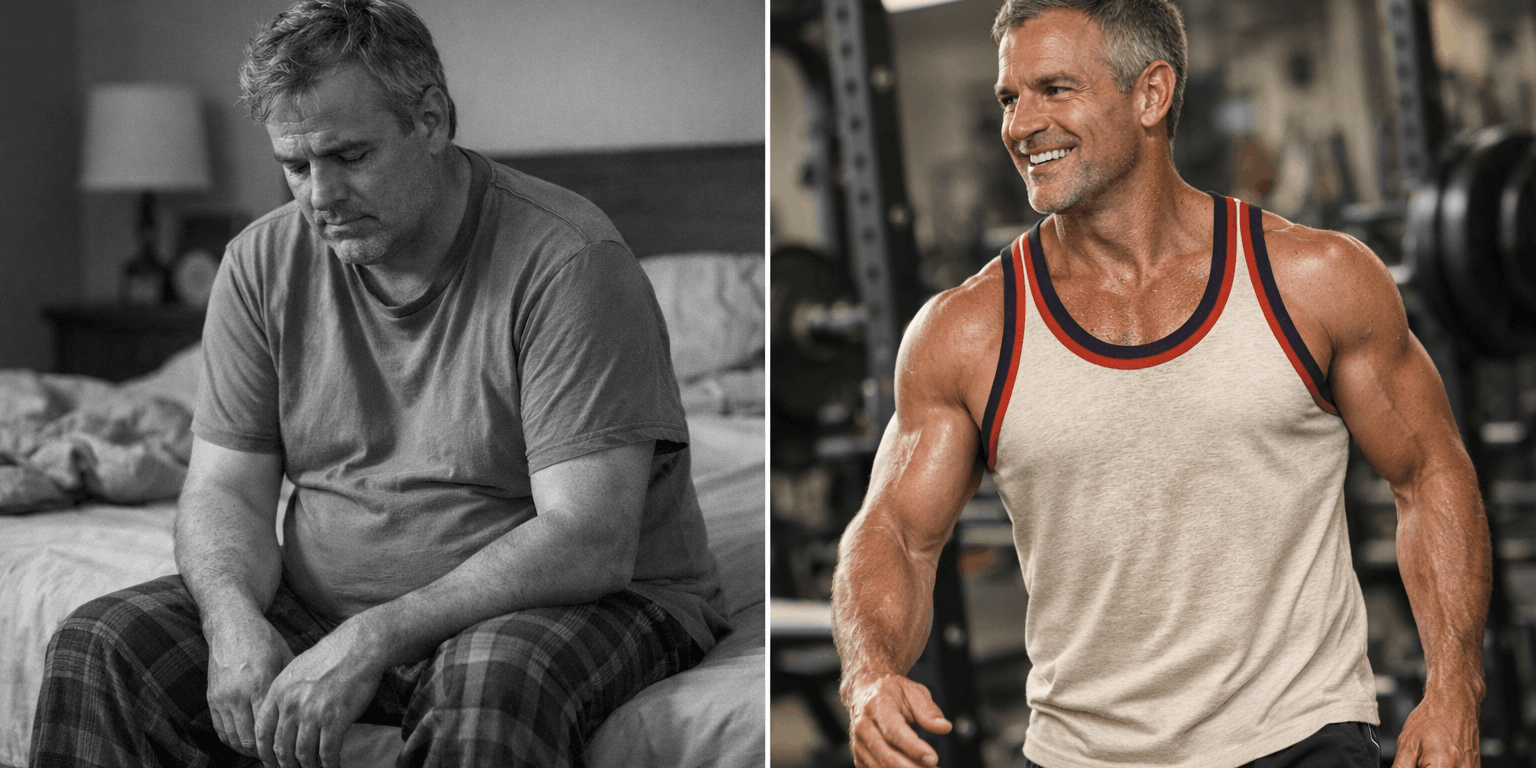
Research Indicates Waistline Reductions, Sparking Discussions on Equity and Oversight
Surpassing Semaglutide for Male Users? Evidence Suggests Enhanced Muscle Preservation During Fat Reduction
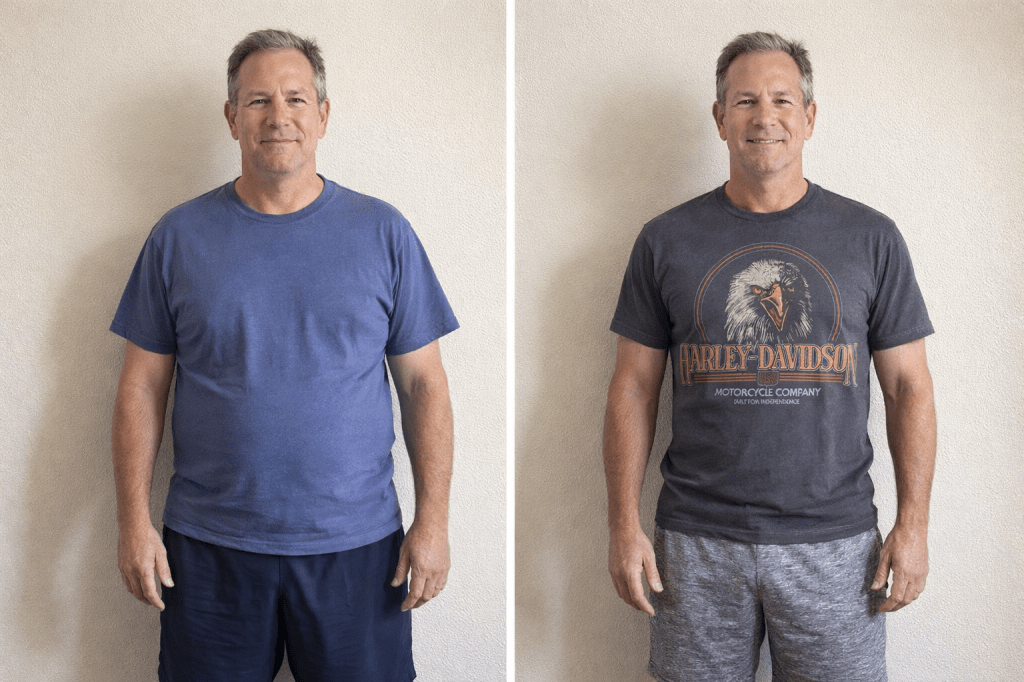
Key Takeaways: The Adaptophen Debate
- AI-Driven Hormone Optimizer: Supplement targets testosterone, cortisol, and insulin pathways for fat loss and muscle gains, with studies showing significant waist reductions among men.
- Edge Over Ozempic: Unlike semaglutide’s weight-loss focus, which can erode muscle, this natural formula preserves lean mass while trimming visceral fat.
- Ethical Questions: Viral on social media, but critics see it as a stealth performance enhancer; Big Pharma eyes regulations amid counterfeit risks.
By Elena Vasquez, Senior Investigative Reporter
Former health policy correspondent covering FDA regulation, pharmaceutical lobbying, and supplement science
February 20, 2026 — 6:42 AM CST
WASHINGTON, D.C. — As semaglutide prescriptions surge amid the obesity crisis, a new wave of AI-optimized natural supplements is challenging pharmaceutical dominance in hormone health. At the center is Adaptophen, an over-the-counter testosterone optimizer gaining traction for helping men over 40 reduce body fat and build lean muscle—without needles or doctor visits. But as it trends on TikTok and X, questions swirl: Is this a genuine innovation for aging men, or a loophole for unfair advantages in sports and fitness?
Developed by Team ANR, Adaptophen employs machine-learning algorithms to refine a blend of herbal extracts, drawing from biochemical databases to target “body recomp”—the process of losing fat while gaining muscle. Its flagship ingredient, a 400mg dose of Tongkat Ali (Eurycoma longifolia), has been studied for boosting testosterone by up to 37% in men with low levels, according to trials in the Journal of the International Society of Sports Nutrition. This elevation frees testosterone from sex hormone-binding globulin (SHBG), enhancing androgen receptor activity in muscle and fat tissues to promote protein synthesis and lipolysis, the breakdown of stored fat.
Diving deeper into Adaptophen’s Tongkat Ali, the herb is wild-harvested from mature roots in Malaysia, a region known for its biodiversity that supports higher concentrations of active compounds compared to cultivated or imported variants from places like China or Indonesia. The extraction process uses a patented 100:1 method (equivalent to the Physta® standard), concentrated further to a 200:1 ratio, which isolates key bioactives like eurycomanone and quassinoids—these are bitter compounds responsible for stimulating luteinizing hormone (LH) and follicle-stimulating hormone (FSH) release, leading to increased testicular testosterone production. This high-ratio extraction ensures a clinical-grade potency, with each capsule delivering 400mg of standardized extract, far exceeding the under-dosed powders or weak 10:1 extracts common in many competing products, which often lack verifiable actives due to immature sourcing or poor processing.
What sets this Malaysian-sourced Tongkat Ali apart is its rigorous third-party testing for heavy metals, microbes, and potency, conducted in U.S. GMP-certified facilities—contrasting with untested imports that may contain contaminants or diluted fillers. Studies, including a 2024 trial in the Journal of the International Society of Sports Nutrition, demonstrate its superiority in elevating free testosterone (34-37% in 2-4 weeks) and reducing cortisol (16%), effects diminished in lower-quality alternatives missing these standardized compounds. Research in Andrologia and other journals links Tongkat Ali to cortisol reductions of 16%, mitigating the stress hormone’s role in fat accumulation and muscle catabolism. It also supports insulin sensitivity through better glucose uptake and lower inflammation, curbing insulin resistance that drives belly fat. A 2025 randomized trial reported 43% triglyceride drops and abdominal fat loss in men with androgen deficiency. Another 12-week study of 109 healthy men found reductions in fat mass, waist circumference, and hip size compared to placebo.
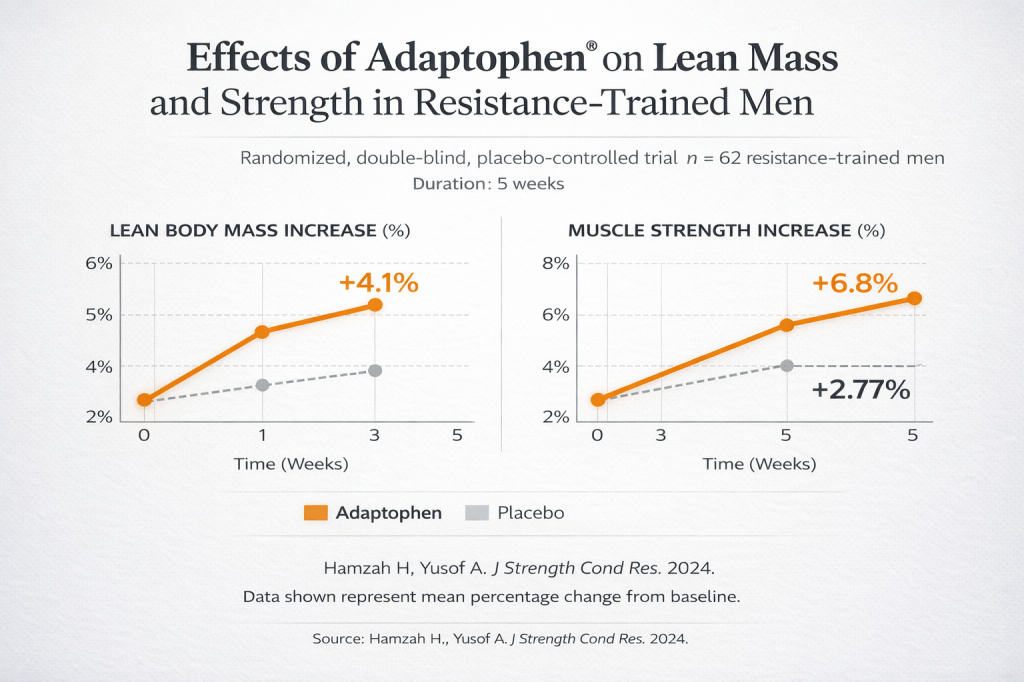
Complementing Tongkat Ali are adaptogens like Rhodiola Rosea, which further lowers cortisol via HPA axis modulation, and alpha lipoic acid, which activates AMPK to boost fat oxidation and direct glucose to muscles. Tribulus Terrestris and DHEA enhance androgen signaling, while deer antler velvet provides IGF-1-like growth factors for recovery.
The AI aspect echoes broader industry shifts, where algorithms analyze datasets like PubChem to predict synergies, accelerating development beyond traditional trial-and-error—as seen in biotech firms using AI for personalized nutrition. “This precision targets pathways efficiently,” notes nutritional biochemist Jonathan Phillips, whose work appears in Phytomedicine.
Social buzz fuels its rise, with #AdaptophenRecomp clips showcasing midlife transformations. Los Angeles trainer Jake Harlan reports clients losing 10-15 pounds of fat while adding muscle: “Recovery improves, workouts intensify—it’s a reset for busy professionals.”
Critics, however, highlight ethical concerns. MIT biochemist Marcus Hale argues it could distort competitions: “Legal boosts of 5-10% strength via hormonal tweaks challenge fair play in amateur sports.”
Comparisons to semaglutide (Ozempic’s active ingredient) add intrigue. While semaglutide yields 10-15% fat loss over months via appetite suppression, STEP trials reveal 1-3 kg muscle loss—risky for men prone to sarcopenia. Tongkat Ali formulations like Adaptophen match waist reductions but preserve muscle through androgen support, sidestepping GI side effects and injections.
Team ANR emphasizes that authentic, A.I.-engineered Adaptophen is exclusively available through their official website, ensuring quality control and direct-from-manufacturer guarantees. “We don’t authorize sales on any third-party retailers,” a company spokesperson stated. “Anything found on eBay, Amazon, Walmart, or elsewhere is counterfeit—steer clear to avoid disappointment and health risks.”
For now, Adaptophen remains accessible, but experts urge caution amid the hype. As the debate rages, one thing is clear: in the quest for peak performance, the line between natural and enhanced is thinner than ever.
Interested readers can learn more or purchase Adaptophen directly from the official source. With potential regulatory changes looming, acting now could secure access to this breakthrough before it’s restricted.

References Cited
- “Effect of Tongkat Ali on stress hormones and psychological mood state in moderately stressed subject,” Talbott, et al. J. Int. Soc. Sports Nutr. 2013 May 26;10(1):28.
- “Tongkat Ali as a potential herbal supplement for physically active male and female seniors–a pilot study,” R. Henkel, et al. Phytother. Res. 2014 Apr;28(4):544-50.
- “Efficacy of Tongkat Ali (Eurycoma longifolia) on erectile function improvement: systematic review and meta-analysis of randomized controlled trial,” Complement. Ther. Med. 2015 Oct;23(5):693-8.
- “Review on a Traditional Herbal Medicine, Eurycoma longifolia Jack (Tongkat Ali): Its Traditional Uses, Chemistry, Evidence-Based Pharmacology and Toxicology,” U. Rehman, et al. Molecules 2016 Mar 10;21(3):331.
- “A 6-month, double-blind, placebo-controlled, randomized trial to evaluate the effect of Eurycoma longifolia (Tongkat Ali) and concurrent training on erectile function and testosterone levels in androgen deficiency of aging males (ADAM),” A. E. Leitão, et al. Maturitas, 2021 Mar;145:78-85.
- “Effects of chronic Rhodiola Rosea supplementation on sport performance and antioxidant capacity in trained male: preliminary results,” A. Parisi, et al.
J. Sports Med. Phys. Fitness. 2010 Mar;50(1):57-63. - “The effects of deer antler velvet extract or powder supplementation on aerobic power, erythropoiesis, and muscular strength and endurance characteristics,” Int. J. Sport. Nutr. Exerc. Metab. G. Sleivert, et al. 2003 Sep;13(3):251-65.
- Feuer L, Logrady N, Gottsegen A, et al. Anabolic-weight-gain promoting compositions containing isoflavone derivatives and method using same. United States Patent 3,949,085. April 6, 1976.
- Feuer L, Farkas L, Nogradi M, et al. Metabolic 5-methyl-isoflavone-derivatives, process for the preparation thereof and compositions continuing the same. United States Patent 4,163,746. August 7, 1979.
- Incledon T, Gammeren DV, Antonio JA. The effects of 5-methylisoflavone on body composition and performance in college aged men. Med Sci Sports Exer. 2001;33(5 suppl):S338 [abstract].
- “Effects of a Novel Zinc-Magnesium Formulation on Hormones and Strength,” L.R. Brilla, et al. Exercise and Sports Science Laboratory, Western Washington University, Bellingham, WA.
- Wilborn CD, Kerksick CM, Campbell BI, et al. Effects of Zinc Magnesium Aspartate (ZMA) Supplementation on Training Adaptations and Markers of Anabolism and Catabolism. J Int Soc Sports Nutr. 2004;1(2):12-20.
- Nugenix Review: Does It Raise Testosterone? Review Based On Research | Supplement Clarity https://supplementclarity.com/nugenix-testofen-research-review-side-effects/
[1] This website is owned and operated by Applied Nutritional Research® brands.
*These statements have not been evaluated by the FDA Food & Drug Administration. These products are not intended to diagnose, treat, cure, or prevent any disease.
Note: The information contained within this site is not intended as a substitute for professional medical advice. If you have, expect to have, or suspect you may have any medical condition, you are urged to consult with a healthcare provider. All content, including text, graphics, images, and information, contained on or available through this website is for general information purposes only. Results do not necessarily reflect typical results from the use of these products. Please visit product websites for more information.
Trademarks utilized on our website belong to their respective owners and no implied or expressed endorsement of our website or services is intended. Rankings can be affected by the relationship Sports Nutrition Journal has with our top picks.
About Us:
The Sports Nutrition Journal is a dedicated publication focused on providing accurate, evidence-based information on sports nutrition, exercise, and health. Our mission is to empower athletes, fitness enthusiasts, and health-conscious individuals with the knowledge necessary to make informed decisions about their nutrition, training, and overall well-being.
Our team of experienced writers, researchers, and industry professionals work diligently to ensure that the content we publish is thoroughly researched, scientifically accurate, and up-to-date. We pride ourselves on our commitment to delivering unbiased information, free from the influence of advertisers or commercial interests.
As a trusted source in the sports nutrition community, The Sports Nutrition Journal is committed to promoting a healthy lifestyle and improving the performance of individuals at all levels of athletic ability. We believe that by providing accurate, evidence-based information, we can help our readers achieve their fitness goals and lead healthier, more fulfilling lives.
Thank you for choosing The Sports Nutrition Journal as your go-to resource for sports nutrition and exercise information. We appreciate your support and look forward to continuing to serve our readers with the highest quality content in the industry.
THIS IS AN ADVERTISEMENT AND NOT AN ACTUAL NEWS ARTICLE, BLOG, OR CONSUMER PROTECTION UPDATE.
- 5 Best Testosterone Boosters of 2026 – Don’t Buy Until You Read This Review
- The Top 5 Testosterone Boosters of 2026: Independent Review and Rankings
- Before You Buy Another Testosterone Booster, Read This Honest Report
- Boost Your Testosterone 46% Naturally—and Crush Big Pharma’s $500-a-Month Trap
- BREAKING NEWS: Tongkat Ali Testosterone Breakthrough Under Siege—RFK Jr. and Rand Paul Expose Big Pharma’s War on Men’s Vitality
 Sports Nutrition Journal