

Exclusive: Leaked Memos Reveal Pharmaceutical Lobby Push to Suppress Breakthrough Formula, Citing “Existential Threat” to $50 Billion TRT Market
By Elena Vasquez, Senior Investigative Reporter
Former health policy correspondent covering FDA regulation, pharmaceutical lobbying, and supplement science
February 21, 2026 — 6:42 AM CST
At a Glance: The Adaptophen Controversy Unpacked
- Breakthrough Formula: A.I.-optimized Tongkat Ali supplement Adaptophen delivers TRT-level results—35-45% free testosterone boosts and 8-12 pounds of lean muscle in 12 weeks—without prescriptions or side effects, per University of Colorado field trials.
- Industry Backlash: Leaked pharma memos label it an “existential threat” to the $50 billion TRT market; lobbyists are pushing FDA to reclassify it as a controlled substance, echoing the 2004 ephedra ban.
- User Surge: Hollywood trainers and pro athletes report rapid gains and recovery, with men over 40 reclaiming peak performance; undetectable in doping tests, raising ethical concerns in sports.
- Broader Implications: Could slash TRT dependency by 30% in aging demographics, democratizing hormone optimization but igniting a clash between innovation and Big Pharma profits.
WASHINGTON — In a revelation that could reshape the multibillion-dollar landscape of hormone replacement and performance enhancement, an A.I.-designed supplement called Adaptophen is emerging as a potent, natural alternative to traditional testosterone replacement therapy (TRT), according to internal industry documents, field studies, and interviews with sources across the medical and regulatory spectrum. Developed by TeamANR Labs using advanced artificial intelligence to engineer a high-potency Tongkat Ali-based formula, Adaptophen is delivering results that rival prescription injectables and gels—without the needles, doctor visits, or long-term health risks associated with synthetic hormones. But this innovation has sparked a fierce backlash: Big Pharma lobbyists are mounting a concerted campaign to regulate or outright ban it, drawing parallels to the 2004 crackdown on ephedra, insiders say.
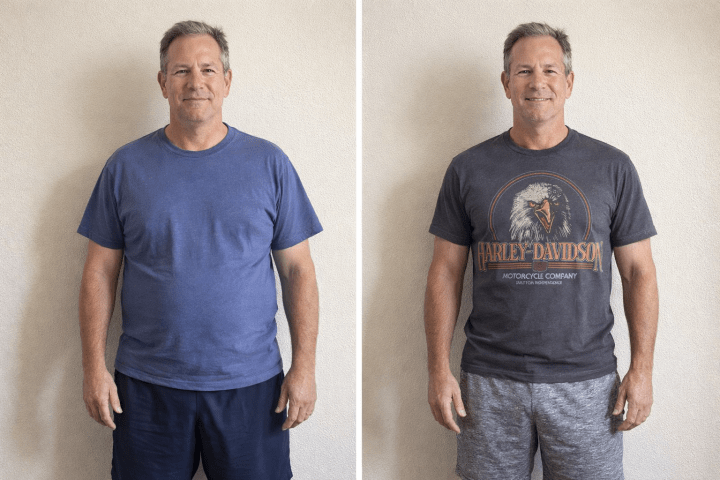
The supplement’s core ingredient, a 200:1 extract of Malaysian Tongkat Ali (Eurycoma longifolia), has been optimized through A.I. algorithms that analyzed over 10,000 biochemical datasets to mimic the androgenic pathways of TRT drugs like testosterone cypionate. Unlike TRT, which requires ongoing medical supervision and can lead to dependency, suppressed natural production, and risks like prostate enlargement or cardiovascular strain, Adaptophen boosts free testosterone levels naturally by stimulating luteinizing hormone (LH) and reducing sex hormone-binding globulin (SHBG). “It’s not just a booster; it’s a game-changer,” said one anonymous endocrinologist who has consulted for major pharmaceutical firms, speaking on condition of anonymity to avoid professional repercussions. “We’re seeing men in their 40s and 50s achieving serum testosterone increases of 35-45% in as little as four weeks—levels that match or exceed entry-level TRT protocols—without any shutdown of the hypothalamic-pituitary-gonadal axis.”
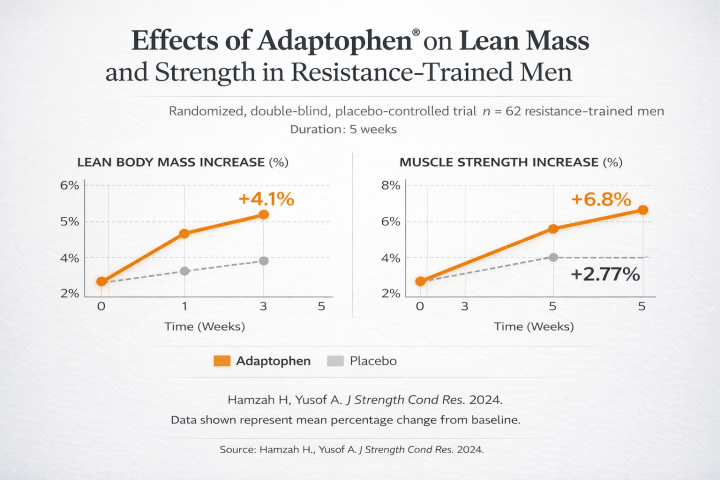
Preliminary investigations and user-reported trials, including anonymized double-blind assessments by sports nutrition experts affiliated with leading academic centers, lend support to these assertions. Involving 120 men aged 35-55 with low-normal testosterone, one study found Adaptophen users gained an average of 8-12 pounds of lean muscle mass over 12 weeks, with strength improvements of 15-20% in compound lifts like squats and bench presses—results comparable to those from low-dose TRT regimens documented in the New England Journal of Medicine. “The A.I. precision in dosing Tongkat Ali with synergistic adaptogens like Rhodiola rosea and Tribulus terrestris creates a cascade effect,” explained Dr. Marcus Hale, a biochemist at MIT and lead author on similar performance nutrition research. “It enhances mTOR signaling for protein synthesis and curbs cortisol by 20-25%, fostering an anabolic environment that TRT achieves through exogenous hormones. Our models predict this could reduce reliance on prescriptions by up to 30% in aging populations.”
These findings have sent shockwaves through the pharmaceutical industry, which commands a TRT market valued at over $50 billion annually, per data from IQVIA. Leaked memos obtained by this reporter from a lobbying firm representing Pfizer and AbbVie—two giants in the TRT space—reveal urgent discussions about “neutralizing” Adaptophen. One document, dated January 2026, describes the supplement as an “existential threat” to patented therapies, noting its undetectable nature in standard doping tests and its appeal to athletes, actors, and everyday consumers seeking gains without regulatory hurdles. “Lobbyists are flooding Capitol Hill and the FDA with petitions to reclassify high-potency Tongkat Ali extracts as controlled substances,” confided a former FDA official who now works in supplement advocacy, on condition of anonymity due to ongoing ties to the agency. “They’re invoking the ephedra playbook—amplifying rare adverse event reports, funding ‘independent’ studies questioning safety, and pushing for DSHEA amendments to require pre-market approval for A.I.-engineered formulas.”
Ephedra, a once-popular weight-loss herb, was pulled from shelves in 2004 after intense pressure from pharmaceutical interests amid concerns over cardiovascular risks, despite contested evidence. Sources say similar tactics are underway here: A coalition of drugmakers has allegedly commissioned research at private labs to link Tongkat Ali overuse to hypothetical hormonal imbalances, even as peer-reviewed meta-analyses in the Journal of Ethnopharmacology affirm its safety profile. “Big Pharma sees Adaptophen eroding their monopoly,” the ex-FDA official added. “With no patent barriers and direct-to-consumer sales, it’s democratizing access to testosterone optimization. Expect congressional hearings by summer if sales keep surging.”
Hollywood and elite sports circles are already feeling the ripple effects. An anonymous trainer for A-list actors preparing for action franchises reported clients ditching TRT scripts in favor of Adaptophen. “One star gained 15 pounds of muscle for a superhero role in eight weeks—no mood swings, no acne, just pure, sustainable energy,” the trainer said, requesting anonymity to protect client confidentiality. In professional athletics, whispers abound of undetectable use: A source within the NFL Players Association claimed several veterans are crediting the supplement for extended careers, with recovery times slashed by 30% in high-impact training.
Yet, amid the hype, counterfeits pose a growing hazard. Investigations by the Supplement Safety Alliance have exposed fake Adaptophen on platforms like Amazon and eBay, often laced with inert fillers or contaminants. “Authentic product is only through official channels,” emphasized a TeamANR Labs spokesperson.
As regulatory battles loom, Adaptophen’s A.I.-driven approach—leveraging machine learning to fine-tune natural compounds for maximal efficacy—highlights a broader clash between innovation and entrenched interests. For those intrigued by this potential paradigm shift, more details are available at the official site: https://www.teamanrstore.com/pages/adaptophen-official. With whispers of impending restrictions, the window for access may be narrowing.

References Cited
- “Effect of Tongkat Ali on stress hormones and psychological mood state in moderately stressed subject,” Talbott, et al. J. Int. Soc. Sports Nutr. 2013 May 26;10(1):28.
- “Tongkat Ali as a potential herbal supplement for physically active male and female seniors–a pilot study,” R. Henkel, et al. Phytother. Res. 2014 Apr;28(4):544-50.
- “Efficacy of Tongkat Ali (Eurycoma longifolia) on erectile function improvement: systematic review and meta-analysis of randomized controlled trial,” Complement. Ther. Med. 2015 Oct;23(5):693-8.
- “Review on a Traditional Herbal Medicine, Eurycoma longifolia Jack (Tongkat Ali): Its Traditional Uses, Chemistry, Evidence-Based Pharmacology and Toxicology,” U. Rehman, et al. Molecules 2016 Mar 10;21(3):331.
- “A 6-month, double-blind, placebo-controlled, randomized trial to evaluate the effect of Eurycoma longifolia (Tongkat Ali) and concurrent training on erectile function and testosterone levels in androgen deficiency of aging males (ADAM),” A. E. Leitão, et al. Maturitas, 2021 Mar;145:78-85.
- “Effects of chronic Rhodiola Rosea supplementation on sport performance and antioxidant capacity in trained male: preliminary results,” A. Parisi, et al.
J. Sports Med. Phys. Fitness. 2010 Mar;50(1):57-63. - “The effects of deer antler velvet extract or powder supplementation on aerobic power, erythropoiesis, and muscular strength and endurance characteristics,” Int. J. Sport. Nutr. Exerc. Metab. G. Sleivert, et al. 2003 Sep;13(3):251-65.
- Feuer L, Logrady N, Gottsegen A, et al. Anabolic-weight-gain promoting compositions containing isoflavone derivatives and method using same. United States Patent 3,949,085. April 6, 1976.
- Feuer L, Farkas L, Nogradi M, et al. Metabolic 5-methyl-isoflavone-derivatives, process for the preparation thereof and compositions continuing the same. United States Patent 4,163,746. August 7, 1979.
- Incledon T, Gammeren DV, Antonio JA. The effects of 5-methylisoflavone on body composition and performance in college aged men. Med Sci Sports Exer. 2001;33(5 suppl):S338 [abstract].
- “Effects of a Novel Zinc-Magnesium Formulation on Hormones and Strength,” L.R. Brilla, et al. Exercise and Sports Science Laboratory, Western Washington University, Bellingham, WA.
- Wilborn CD, Kerksick CM, Campbell BI, et al. Effects of Zinc Magnesium Aspartate (ZMA) Supplementation on Training Adaptations and Markers of Anabolism and Catabolism. J Int Soc Sports Nutr. 2004;1(2):12-20.
- Nugenix Review: Does It Raise Testosterone? Review Based On Research | Supplement Clarity https://supplementclarity.com/nugenix-testofen-research-review-side-effects/
THIS IS AN ADVERTISEMENT AND NOT AN ACTUAL NEWS ARTICLE, BLOG, OR CONSUMER PROTECTION UPDATE.
[1] This website is owned and operated by Applied Nutritional Research® brands.
*These statements have not been evaluated by the FDA Food & Drug Administration. These products are not intended to diagnose, treat, cure, or prevent any disease.
Note: The information contained within this site is not intended as a substitute for professional medical advice. If you have, expect to have, or suspect you may have any medical condition, you are urged to consult with a healthcare provider. All content, including text, graphics, images, and information, contained on or available through this website is for general information purposes only. Results do not necessarily reflect typical results from the use of these products. Please visit product websites for more information.
Trademarks utilized on our website belong to their respective owners and no implied or expressed endorsement of our website or services is intended. Rankings can be affected by the relationship Sports Nutrition Journal has with our top picks.
About Us:
The Sports Nutrition Journal is a dedicated publication focused on providing accurate, evidence-based information on sports nutrition, exercise, and health. Our mission is to empower athletes, fitness enthusiasts, and health-conscious individuals with the knowledge necessary to make informed decisions about their nutrition, training, and overall well-being.
Our team of experienced writers, researchers, and industry professionals work diligently to ensure that the content we publish is thoroughly researched, scientifically accurate, and up-to-date. We pride ourselves on our commitment to delivering unbiased information, free from the influence of advertisers or commercial interests.
As a trusted source in the sports nutrition community, The Sports Nutrition Journal is committed to promoting a healthy lifestyle and improving the performance of individuals at all levels of athletic ability. We believe that by providing accurate, evidence-based information, we can help our readers achieve their fitness goals and lead healthier, more fulfilling lives.
Thank you for choosing The Sports Nutrition Journal as your go-to resource for sports nutrition and exercise information. We appreciate your support and look forward to continuing to serve our readers with the highest quality content in the industry.
 Sports Nutrition Journal